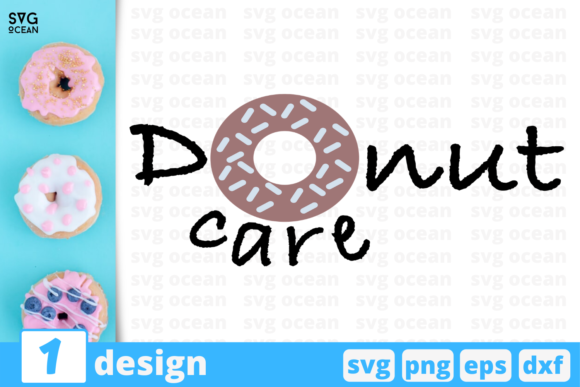
Donut Care: A Designer’s Take on Sweet Embroidery
As a designer who has spent countless hours digitizing patterns and testing them on various fabrics, I have learned that the difference between a cute idea and a sellable product often comes down to execution. When I first encountered Donut Care, my initial reaction was one of amused recognition. It is a playful pun, visually anchored by the universal appeal of a donut. But as an embroidery product reviewer, I do not stop at the surface level. I need to know how this design behaves under the needle, how it translates from a digital graphic to a tactile finished product, and whether it holds up in real-world commercial applications.
The design falls squarely into the Crafts category, specifically within the realm of modern, humorous Graphics for home decor and apparel. The concept is simple: a visual representation of a donut paired with a care-themed quote. This simplicity is its greatest strength, but also its potential pitfall if not handled with technical precision. In this review, I am evaluating Donut Care not just as a image, but as a functional asset for your next embroidery project.
First Impressions and Visual Personality
The mood of Donut Care is lighthearted, comforting, and slightly cheeky. It taps into the current trend of self-care messaging but delivers it with a sugary twist. Visually, the layout relies on bold shapes and clear typography. For an embroidery designer, this is promising. Bold shapes translate well to stitching because they allow for consistent fill stitch coverage without excessive jump stitches or complex underlay requirements.
However, the devil is in the details. The success of this design depends heavily on the balance between the text and the graphical element. If the lettering is too thin, it may get lost in the fabric texture. If the donut graphic is too dense, it can cause puckering. My first impression suggests that this design is best suited for projects where clarity is key. It is not a subtle, background accent; it is meant to be the focal point. This makes it ideal for a personalized gift or a statement piece in a small shop.
Real-World Application: The Tote Bag Test
To truly evaluate Donut Care, I imagined applying it to a canvas tote bag. This is a common item for Etsy sellers and craft business owners. Canvas is a sturdy fabric, but it has a visible weave. When I visualized the design stitched onto a natural cotton canvas, the contrast became a primary concern. A light thread color on a light bag would vanish. Therefore, this design demands high-contrast thread colors. Think vibrant pinks, deep chocolates, or bright whites against darker backgrounds.
In this scenario, the Donut Care design performs well because of its relatively open structure. It does not require a massive amount of density, which means it will not stiffen the tote bag excessively. The result is a handmade product that feels professional rather than bulky. For a small shop product, this balance is crucial. Customers want durability, but they also want the item to remain flexible and usable.
Apparel and Custom Sweatshirts
Moving from accessories to apparel, let us consider sweatshirt embroidery. A fleece or cotton-blend sweatshirt provides a soft, textured background. Here, the stability of the fabric helps support the design. However, stretch is a factor. If you are stitching Donut Care onto a stretchy knit, you must use a cut-away stabilizer to prevent the design from distorting after washing.
The playful nature of the quote makes it a strong candidate for custom apparel aimed at younger demographics or those who appreciate humor in their wardrobe. It works exceptionally well as a chest-left logo or a larger back print. For baby embroidery, however, I would proceed with caution. While the theme is sweet, ensure that the thread used is soft and that the stitch density is low enough to avoid irritating sensitive skin. Always test on scrap fabric first to check for scratchiness.
Technical Considerations for Stitching
One of the most important aspects of reviewing a digital file is understanding its format and compatibility. The product description notes that the download includes SVG, DXF, PNG, and EPS formats. It explicitly states that the SVG can be used with Cricut Design Space and Silhouette Designer Edition. This indicates that Donut Care is primarily marketed as a cut file for vinyl or paper crafts.
For those of us in the embroidery world, this requires a critical distinction. If you are using this as a reference to create a machine embroidery design, you will need to digitize it yourself or convert it using specialized software. Do not assume the SVG is ready-to-stitch. If you are using it for appliqué, the SVG outlines are perfect for cutting fabric pieces. In an applique design workflow, you would stitch the placement line, place the fabric, tack it down, and then stitch the satin or running stitch border. This method reduces bulk and is excellent for items like embroidered patches or caps.
If you are adapting this for direct embroidery, pay close attention to stitch density. Donuts imply round, smooth surfaces. Using a satin stitch for the icing can create a beautiful, glossy effect, but it must be narrow enough to avoid snagging. For the donut base, a tatami fill might be more appropriate to cover the area efficiently without creating a hard, plastic-like feel.
Where to Use Caution
While Donut Care is versatile, it is not universal. Avoid using it on very thin or sheer fabrics unless you are using a heavy stabilizer and a lightweight thread. The design’s boldness can overwhelm delicate materials. Similarly, be cautious with dark fabrics if your digitizing does not account for proper underlay. Without a solid foundation, the top threads may sink into the pile of towels or fleece, making the design look muddy.
For curved surfaces like hats, ensure the design is scaled appropriately. A design that looks balanced on a flat tote might appear distorted on a cap’s front panel. Always hoop your stabilizer tightly and consider using a topping if stitching on textured fabrics like terry cloth towels. This ensures the embroidery file renders cleanly without the fabric pile interfering with the stitch formation.
Commercial Value and Branding
For commercial embroidery and Etsy listings, presentation is everything. Donut Care has high "giftability." It fits perfectly into niches like teacher appreciation, office humor, or bakery branding. When creating printable mockups or digital previews, show the design in context. A photo of the design on a apron in a kitchen setting sells the lifestyle, not just the graphic.
Before selling, always confirm the licensing terms. Since the provided information mentions specific cutting machine compatibility but does not explicitly detail commercial embroidery rights, you must verify the license with the creator. Using a design for personal projects is different from selling design assets or finished goods. Protect your craft business by ensuring you have the right to sell the finished product.
Final Verdict
Donut Care is a charming, versatile graphic that translates well into embroidery when approached with technical care. It offers a fun, engaging aesthetic that resonates with modern consumers. Whether you are creating a holiday embroidery gift, a tote bag design for a local market, or a unique small shop product, this design has potential. Just remember to respect the material, choose your stabilizer wisely, and always test before you commit to the final piece. With the right execution, it can be a standout addition to your portfolio.