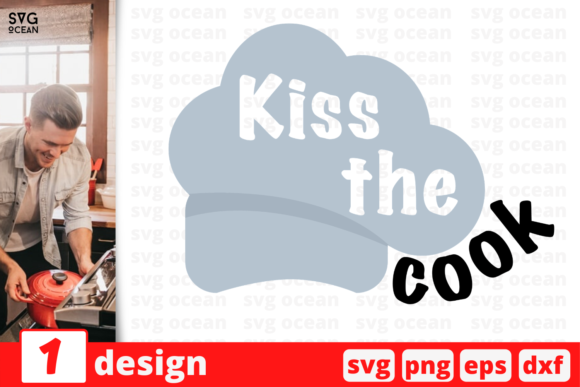
Reviewing the Kiss the Cook Quote for Embroidery
As a designer who has spent countless hours digitizing and stitching out quotes for client projects, I have learned that typography is deceptively difficult. A phrase might look charming on a screen, but once it hits the fabric, the reality of thread tension, fabric texture, and stitch density takes over. Recently, I evaluated the Kiss the Cook Quote to determine its viability for real-world embroidery applications. This isn’t just about whether the text is legible; it is about whether the design holds up under the needle and delivers value to the end user.
The first impression of this design is one of playful domesticity. It carries a lighthearted, humorous tone that fits naturally into the kitchen and home decor niche. For an embroidery project, this mood is crucial. You are not just stitching letters; you are stitching personality. The layout appears balanced, suggesting that with proper scaling, it can serve as a focal point on various items. However, the transition from a digital graphic to a physical machine embroidery design requires careful consideration of how those curves and lines translate into satin stitches or fill stitches.
Real-World Application: The Apron Test
To truly understand the potential of this design, I visualized it on a standard cotton canvas apron. This is a classic use case for the Kiss the Cook Quote. When preparing a custom embroidered item like this, the placement is everything. Centered on the bib, the quote acts as a badge of honor for the home chef. In this scenario, the design needs to be large enough to be read from a few feet away but compact enough not to overwhelm the wearer.
If you are an Etsy seller or run a small shop product line, this type of design is a staple. It appeals to gift-givers looking for a personalized gift that feels thoughtful yet fun. The visual appeal here relies heavily on contrast. On a neutral beige or white apron, using a bold red or deep charcoal thread would make the text pop. The clarity of the lettering determines the professionalism of the finished product. If the digits are too dense, the fabric may pucker; if they are too sparse, the background fabric shows through, ruining the aesthetic.
Versatility Across Product Lines
Beyond aprons, this design has legs in other categories. Consider sweatshirt embroidery. A crewneck sweatshirt provides a stable, thick fabric base that handles stitch density well. Here, the Kiss the Cook Quote could be placed on the upper left chest for a subtle look or across the back for a statement piece. The key is adjusting the scale. For a chest logo, you must ensure that any intricate details in the font do not become lost in the pile of the fleece or terry cloth.
Another strong candidate is the tote bag design. Canvas totes are popular for grocery runs and farmers' market trips. Stitching this quote onto a tote adds a layer of charm to a utilitarian item. However, canvas can be tricky. It often requires a heavy cut-away stabilizer to prevent distortion during stitching. As a designer, I always recommend testing the design on scrap fabric first. This allows you to check the thread colors against the specific shade of the bag and verify that the hoop size you intend to use accommodates the full width of the quote without re-hooping.
For those interested in baby embroidery, caution is advised. While the sentiment is cute, the typical font styles associated with this phrase might be too complex for tiny onesies or burp cloths. Small hoop sizes limit how much detail you can capture. If you attempt this on stretchy baby knits, you must use appropriate stabilizers and potentially simplify the design if the original file allows for editing. Otherwise, the stitches may pull and distort the garment after washing.
Technical Considerations for Stitching Success
When working with any quote-based embroidery file, the devil is in the details. The Kiss the Cook Quote likely utilizes a mix of script and block lettering, which presents unique challenges. Script fonts often require careful underlay stitching to anchor the top stitches, especially on textured fabrics. If the design includes thin serifs or sharp corners, these areas are prone to thread breaks or buildup if the digitizer did not optimize the stitch angles.
I strongly advise reviewing the stitch density before loading the file into your machine. High-density areas can cause the fabric to stiffen, which is undesirable for wearable custom apparel. If you are creating an embroidered patch, however, higher density is acceptable and even preferred for durability. Patches are often washed frequently and handled roughly, so a robust stitch structure ensures longevity.
Color selection plays a massive role in the final outcome. While the design might look great in black on white, try it in contrasting combinations. A navy blue thread on a light gray heather t-shirt offers a sophisticated, modern look. Conversely, bright primary colors might suit a more playful, retro vibe. Always test your design in black and white mockups first to ensure the shape and balance hold up without relying on color for definition.
Navigating File Formats and Licensing
It is important to note the technical specifications provided with this asset. The download includes svg, dxf, png, and eps formats in a zipped folder. These are primarily vector and image formats used for cutting machines and graphic design. The description notes that the SVG can be used with Cricut Design Space, Silhouette Designer Edition, and Make the Cut MTC. This indicates that the primary intent of this file is for vinyl cutting, heat transfer, or sublimation rather than direct machine embroidery.
For embroidery designers, this distinction is critical. You cannot directly import an SVG into most embroidery software and expect a perfect stitch file. You will need to use digitizing software to convert the vector paths into stitches. This gives you control over the satin stitch width, fill stitch direction, and running stitch outlines. If you are not a digitizer, you may need to hire one or look for a dedicated .pes, .dst, or .jef file if available separately. Always confirm licensing before selling finished items or digital products. Just because you can cut it with a Cricut does not automatically grant commercial rights for embroidered goods sold on Etsy or in boutiques.
Enhancing Brand Consistency and Value
For creative entrepreneurs, consistency is key. If your brand focuses on cozy, home-centric Crafts and Graphics, this design fits seamlessly. It reinforces a narrative of warmth and humor. When customers see a well-executed Kiss the Cook Quote on a high-quality towel or apron, it builds trust. They perceive the item as a premium handmade product rather than a mass-produced commodity. This perception allows for higher price points and better customer retention.
Moreover, such designs are excellent for holiday seasons. Think of Christmas gifts for the family chef or Mother’s Day specials. The versatility of the quote means it can be part of a larger collection. You might pair it with simple iconography like whisks, spatulas, or chef hats to create a cohesive line of holiday embroidery products. This approach helps in creating printable mockups for your online store, showcasing the design in various contexts to boost buyer engagement.
In conclusion, the Kiss the Cook Quote is a promising asset for those willing to put in the technical work. It is not a plug-and-play solution for embroidery without proper digitizing or adaptation. However, for the experienced maker who understands fabric behavior, stitch mechanics, and design placement, it offers a charming avenue for creating memorable, sellable goods. Whether for a small business merchandise line or a one-off finished product for a friend, the success lies in the execution. Test thoroughly, stabilize correctly, and stitch with intention.