Stitching Motivation: A Designer’s Review
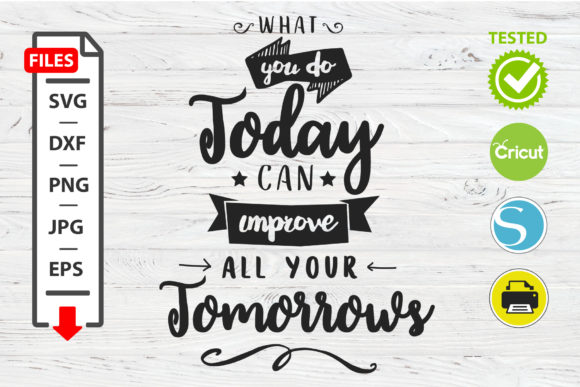
As a designer who has spent countless hours digitizing and reviewing embroidery patterns, I have learned that the most successful designs are not always the most complex. Sometimes, the power lies in the message and its clarity. Recently, I evaluated What You Do Today Can Improve All Your Tomorrow., a motivational quote SVG Cricut Silhouette design. While often categorized under general Crafts and Graphics, this piece holds specific potential for machine embroidery when handled with care. My goal here is to break down how this design performs in real-world applications, moving beyond the digital preview to the tactile reality of thread on fabric.
First Impressions and Visual Personality
The immediate appeal of What You Do Today Can Improve All Your Tomorrow. is its optimistic tone. In a market saturated with fleeting trends, timeless motivation retains value. The layout typically features a balanced composition, essential for embroidery where symmetry affects stitch tension. When I first loaded the file into my editing software, I looked for clean vector lines. Since the source is provided as an SVG, DFX, PNG, JPG, and EPS, the versatility is evident. However, for embroidery, the conversion from vector to stitch data is critical. The design exudes a calm, professional mood, making it suitable for both personal reflection and commercial branding. It does not scream for attention; rather, it invites a second look, which is exactly what you want in a high-quality handmade product.
Real-World Application: The Custom Tote Bag Scenario
To truly test the viability of this design, I imagined a specific project: a custom embroidered tote bag for a local bookstore’s loyalty program. Tote bags are a staple for any Etsy seller or small shop product because they offer a large, flat canvas. Using What You Do Today Can Improve All Your Tomorrow. in this context transforms a simple utility item into a daily reminder of productivity and hope.
In this scenario, the design would likely be centered on the front panel. I visualized using a classic serif font for "Today" and "Tomorrow" to anchor the phrase, with a lighter script for the connecting words. This contrast in typography helps manage stitch density. If the entire quote were in a heavy fill stitch, the fabric would pucker. By varying the stroke weight, the design breathes. For a craft business, this means the finished product looks professional rather than bulky. Customers reacting to this bag would likely appreciate the subtle encouragement, increasing the perceived value of the personalized gift.
Fabric Considerations and Stitching Clarity
One of the most critical aspects of reviewing any embroidery file is understanding how it interacts with fabric texture. This design, being text-heavy, requires precise stitching clarity. On smooth fabrics like cotton twill or polished polyester, the letters will appear crisp. However, on textured fabrics like linen or terrycloth towels, small details can get lost. I advise using a satin stitch for smaller elements and a fill stitch for larger letters to ensure legibility.
When working with stretchy fabric, such as in custom apparel like sweatshirts or t-shirts, stability is key. The phrase What You Do Today Can Improve All Your Tomorrow. spans a moderate width. If stitched directly onto a knit without proper support, the design may distort after washing. Here, the choice of stabilizer becomes non-negotiable. A cut-away stabilizer is recommended for garments that will undergo frequent laundering, ensuring the embroidery project maintains its shape and the thread colors remain vibrant against the fabric background.
Navigating Challenges: Hoop Size and Detail
While the message is powerful, the physical constraints of embroidery machines must be respected. Before committing to a large run, you must confirm hoop size compatibility. If you are attempting this on a smaller hoop, such as a 4x4 inch frame for a baby embroidery project or a cap, you may need to scale the design down. This introduces risk. Tiny lettering can become illegible if the stitch density is too high or if the thread thickness overwhelms the character shapes.
I recommend inspecting small details closely in your digitizing software. Look for overlapping stitches or excessive travel jumps that could cause thread breaks. For curved surfaces like caps, the design might need to be arched slightly to follow the contour of the hat. Without this adjustment, the text could appear warped once stitched. Always test the design on scrap fabric first. This simple step saves time and materials, allowing you to adjust thread colors and tension before working on the final piece.
Commercial Viability and Brand Consistency
For commercial embroidery projects, consistency is vital. Whether you are creating holiday embroidery for seasonal gifts or everyday items for boutique branding, the design must align with your aesthetic. What You Do Today Can Improve All Your Tomorrow. is versatile enough to fit various niches. It works well for nursery decor, offering gentle encouragement to parents, or for office accessories, promoting a productive mindset.
From a business perspective, this design enhances buyer engagement. Motivational quotes are highly shareable on social media, providing organic marketing for your handmade product. When customers see a well-executed embroidered patch or apron with this quote, they associate your brand with quality and positivity. However, always confirm licensing before selling finished items or digital products. Since this is a digital embroidery file sourced from a graphic provider, ensure your license covers commercial use for physical goods.
Practical Designer Notes for Best Results
To maximize the potential of this design, consider these practical steps:
- Test on Scrap Fabric: Always run a test stitch-out to check for puckering or thread breaks.
- Check Thread Color Contrast: Ensure the thread colors stand out against the fabric. High contrast improves readability.
- Review Stitch Density: Adjust density based on fabric weight. Lower density for delicate fabrics, higher for sturdy canvases.
- Confirm Hoop Size: Measure the design dimensions against your machine’s maximum hoop capacity.
- Inspect Small Details: Zoom in on tight corners and small letters to ensure they will stitch cleanly.
- Use Proper Stabilizer: Match the stabilizer type to the fabric stretch and weight.
- Mockup Testing: Create printable mockups or digital previews to visualize the design on different product types before stitching.
In conclusion, What You Do Today Can Improve All Your Tomorrow. is more than just a string of words; it is a design asset that, when executed with technical precision, adds significant value to any embroidery project. By paying attention to fabric choice, stitch technique, and commercial licensing, you can transform this digital file into a tangible, impactful product that resonates with customers.